
What Is Gambling Addiction?
Gambling addiction is real and it’s common. With rising awareness and more people looking for information both about gambling addiction in general and rehab for gambling addiction specifically, this post seeks to cover the basics: what it is, how it develops, who it affects, and why it requires professional treatment.
Most people gamble at some point in their lives. A fantasy football league, a casino trip, a lottery ticket on a whim. For the majority, it stays exactly that, an occasional and distinct diversion, a fun little recreation that we experience and then move on from.
But for an estimated 2.5% of the population, gambling crosses a line. It stops being entertainment and becomes a compulsion they can’t control that costs them money, relationships, careers, and in the darkest cases, their lives. 8% of American adults, almost 20 million people, reported experiencing at least one indicator of problematic gambling behavior “many times” in the past year.
The Clinical Definition
Gambling addiction, formally known as Gambling Disorder, is classified in the DSM-5 (the Diagnostic and Statistical Manual of Mental Disorders) as a behavioral addiction. It’s the only behavioral addiction currently recognized alongside substance use disorders in that classification.
To meet the clinical threshold for Gambling Disorder, a person must exhibit at least four of the following over a 12-month period:
- Needing to gamble with increasing amounts of money to achieve the desired excitement
- Feeling restless or irritable when trying to cut down or stop gambling
- Making repeated unsuccessful efforts to control, cut back, or stop gambling
- Being preoccupied with gambling (reliving past gambling, planning future gambling, thinking about how to get money to gamble)
- Gambling when feeling distressed, helpless, guilty, anxious, or depressed
- Returning to gambling after losing money in an attempt to get even (known as “chasing losses”)
- Lying to conceal the extent of gambling involvement
- Jeopardizing or losing significant relationships, a job, or educational opportunity because of gambling
- Relying on others to provide money to relieve desperate financial situations caused by gambling
What may read as just a checklist of bad habits is actually a clinical portrait of a disorder that, left untreated, tends to worsen over time.
It’s Happening in the Brain
Gambling addiction is a neurobiological disorder of the brain’s reward system.
When a person gambles, the anticipation of a potential win triggers a release of dopamine, the same neurotransmitter involved in drug and alcohol addiction. The brain registers this dopamine hit as a reward and the behavior that caused it so something to do more of. Over time, the brain adapts and bets and stakes that used to trigger that reward loop are no longer enough. The gambler must keep upping the ante to generate the same dopamine response. This is known as tolerance and it mirrors, almost exactly, what happens with substance addiction.
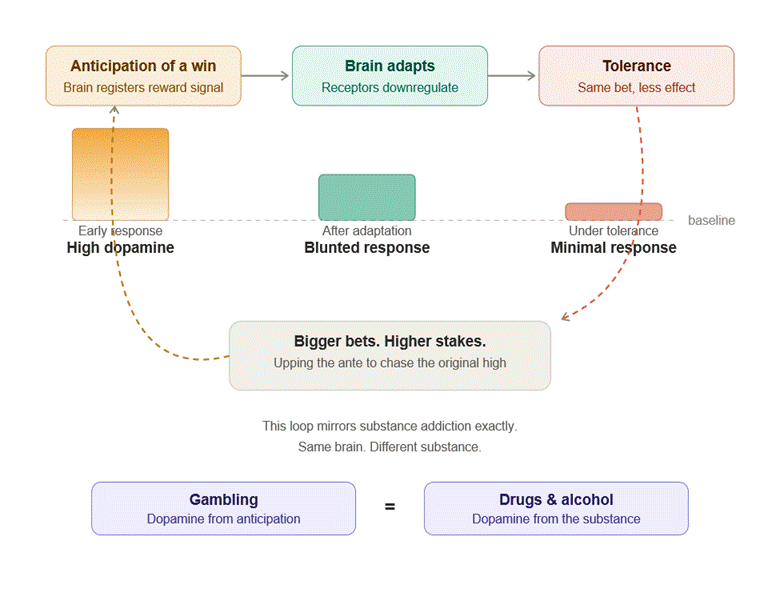
Specific to gambling, the near-miss is particularly potent. Companies know this and design their games specifically to produce near-miss outcomes which activate the brain’s reward circuitry almost as strongly as an actual win. This keeps people playing long past the point of rational decision-making.
Compounding this, gambling addiction tends to dysregulate the prefrontal cortex, the part of the brain responsible for impulse control, risk assessment, and long-term thinking. This is why people with gambling disorder continue gambling even when logically they know the ultimate outcome. Stupidity or weakness is not what’s driving bad decisions, it’s a structurally compromised and altered decision-making architecture in a gambling addicts brain.
How Gambling Addiction Develops
Not everyone who gambles develops an addiction. Some factors that increase vulnerability:
- Genetic predisposition Studies suggest gambling disorder runs in families. If a parent or sibling has struggled with addiction to gambling or substances, the risk is meaningfully higher.
- Mental health comorbidities Gambling disorder frequently co-occurs with depression, anxiety, ADHD, and substance use disorders. People sometimes use gambling as a way to cope with emotional pain, and the temporary relief it provides can accelerate the addiction cycle.
- Early big win Many people with gambling disorder report a significant early win that hooked them. This moment where gambling felt magical and profitable can set an unrealistic expectation the brain keeps chasing.
- Accessibility and exposure The more available gambling is, the higher the rates of problem gambling in a population. The explosion of legal sports betting apps in the U.S. over the last several years has corresponded with a measurable increase in gambling disorder diagnoses.
- Trauma history Adverse childhood experiences and unresolved trauma are correlated with higher rates of behavioral addiction, including gambling.
Who It Affects
Gambling disorder affects people across every demographic, income level, age group, and background. Some patterns are worth noting:
- Men are diagnosed at higher rates than women, though the gender gap has narrowed significantly as online gambling has grown.
- Young adults (18–34) are currently the fastest-growing demographic for problem gambling, driven largely by sports betting apps, casino apps, and prediction markets that are accessible to under 21 year olds.
- Older adults are an often overlooked population. Live and virtual casino gambling in particular is heavily marketed to retirees.
- Athletes and sports professionals face elevated risk due to constant exposure to betting culture and the sense that many athletes have of their ability to analyze play and thus predict outcomes .
- People with substance use history are at significantly higher risk for developing gambling disorder.
There is no “type.”
The Consequences
Untreated gambling addiction tends to escalate. The consequences compound over time:
- Financial. The average person entering gambling rehab carries significant debt, often tens or hundreds of thousands of dollars. Bankruptcy, foreclosure, and depleted retirement savings are common.
- Relational. Deception is a core feature of active gambling addiction. Relationships erode under the weight of lies, broken promises, and financial damage.
- Occupational. Job loss, career derailment, and professional misconduct (including embezzlement to fund gambling) are documented consequences.
- Legal. Financial desperation can lead to theft, fraud, or other criminal behavior.
- Mental health. Depression, anxiety, and suicidal ideation are significantly elevated in people with gambling disorder. The shame spiral of addiction: gambling to cope, losing, feeling shame, gambling again, is brutal.
- Physical health. Sleep deprivation, neglected self-care, and stress-related conditions are common in active gambling addiction.
- Suicide. The most difficult consequence to bring up is that Gambling Addiction carries the highest rate of suicide attempts of any addiction. It’s a difficult reality to name, but an important one acknowledge. Gamblers often suffer in secret and the shame and debt can feel unsurvivable.
There is always another way out and an ability to work with and through all of the above potential consequences.
Is It Treatable?
Yes. Gambling disorder responds well to treatment particularly when that treatment is specialized.
There are different levels of treatment available. Rehab for gambling addiction provides a structured environment that removes the person from their triggers and gives them the time and support to address the addiction at its root. Inpatient programs provide the most intensive level of care while outpatient programs offer flexibility for those who can’t step away from other obligations.
A good rehab for gambling addiction will offer and tailor modalities specific to gamblers.
Recovery is possible. People rebuild their finances, repair their relationships, and reclaim their lives. But it rarely happens without professional help.
Clear Odds Recovery is a rehab for gambling addiction that is purpose built for gambling addiction. If you or someone you love is struggling, reach out.
